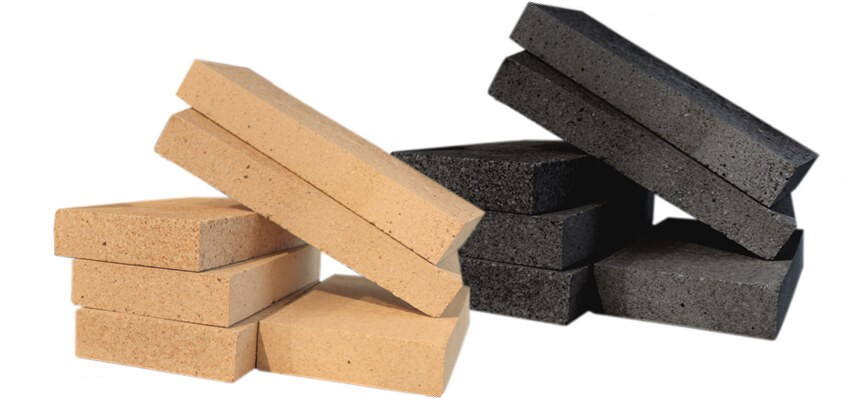
A brick after multiple firings may look different from a new one, but colour alone does not determine replacement. More important is whether it maintains its function and support. Start the assessment after cooling and cleaning the surface using a method allowed for the given hearth.
Compare the surface with the edges
On dense Vitcas firebricks, inspect the contact points with fuel, tools, and equipment. Record whether you see only deposits or whether parts of the material are missing. Do not scrape harder just to restore the factory appearance.
Check the corners and the joint of adjacent elements. A loss near the grate support may have a different significance than a small change on a non-loaded surface. A photo with a measuring scale allows you to later compare the size of the damage.
Determine which material you are inspecting
Grade 23 insulating bricks are light and porous, so they serve a different role than dense lining. Do not assess them solely based on the appearance of the base brick or use substitution according to similar dimensions. The choice should preserve the function of the layer in the design.
If the damage is accompanied by movement of the element, assess the support and connection. In an appropriate external structure, Outdoor Oven Cement can be considered, but a new joint will not repair a settling substrate.
Prepare the replacement according to the location
Record the format, orientation, and position of the brick before dismantling. Check access and the condition of adjacent parts so that the repair does not accidentally create wider joints. For larger damage, an assessment of the entire section of lining is required.
After completing the work, maintain the required bonding and drying, and then the recommended preparation for heating. Inspection after cooling should cover the same location. The number of firings by itself is not a universal criterion for replacing every brick.